Home Blog Page 5

Former Executive Assistant to Governor Godwin Obaseki, Ethan Uzamere Appointed CoS

0

Edo State Governor Godwin Obaseki has approved the appointment of Eigner Ethan Uzamere as the Chief of State of Edo State.

Speaking at the official welcome ceremony, Governor Godwin Obaseki expects the new Chief of Staff to discharge his duties with utmost fidelity to the state and ensure highest standards of professionalism and accountability to the people and government of Edo State.

” I am honored and grateful to God for this opportunity to serve the good people of Edo State, thanks to the Honorable working Governor Mr. Obaseki for his trust in me,” Uzamere stated.

Mr. Ethan Uzamere is an engineer and politician. He served as Executive Assistance to the Honorable Governor 2019 to 2020. He holds a Degree in Electrical Engineering from Stony Brook University in the United States of America.

Ethan is the son of former Honorable senator of Edo State, Mr. Ehigie Edobor Uzamere.

Miss Curvy Contest already a Successful Tourism Marketing Campaign

0

Godfrey Kiwanda, Uganda’s state minister for tourism, is the man of the moment. It doesn’t matter whether we agree or disagree with his latest scheme – the controversial Miss Curvy Uganda beauty contest that has cast him in the spotlight both locally and internationally.

The backlash that has bedeviled Mr. Kiwanda since he officially launched the beauty contest on Tuesday has garnered Uganda’s tourism sector invaluable publicity in a wide medley of media channels in and outside the country – a feat that would have cost Uganda a great deal of money to achieve.

See, over the past few years, Uganda’s tourism industry has enjoyed exponential growth, attracting millions of visitors and billions of their cash. In fact, tourism is currently Uganda’s biggest foreign exchange earner, raking in more than $1 billion every year.

So, despite the angry rebuke from some women’s rights activists, Mr. Kiwanda launched the beauty contest with a more genuine intention: to keep interest in visiting Uganda strong.

According to Mr Kiwanda, the country’s tourism industry is facing stiff competition from neighbouring countries, and thus the need to diversify.

“Tourism is not just about animals, it’s about our food, the way we walk, the way we were created, our curves,” he said during the launch of the pageant in Kampala, Uganda’s capital.

“We have naturally endowed, nice-looking women that are amazing to look at. Why don’t we use these people as a strategy to promote our tourism industry,” Mr Kiwanda added – much to the chagrin of women’s rights activists, who quickly called for the Miss Curvy Uganda beauty contest to be canceled, arguing that objectifying women’s bodies in the name of promoting tourism was a gross insult to Ugandan women and girls.

One of those women who strongly condemned Mr Kiwanda’s scheme was Rita Aciro, the executive director of the Uganda Women’s Network who immediately demanded that Mr Kiwanda apologises to Ugandan women.

“He should stop using women’s bodies as sex objects. We are not. Not Ugandan women, not any African woman, not any woman in the world,” she said. “Our bodies are not sex objects. We have equal brains, we have equal abilities, we just need equal opportunities.”

The event’s chief organiser, Ann Mungoma, tried to defend the pageant, saying, “Miss Curvy is an event that will bring out the endowment of the real African woman. It is an exceptional event that will see young ladies showcase their beautiful curves and intellect.”

But Ms Mungoma’s polite explanation doesn’t seem to have helped, as she and Mr Kiwanda have now been dragged by Gideon Tugume, the executive director of Human Rights Defenders Uganda, to Mengo Magistrates Court. Mr tugume wants the contest to be stopped because, in his own words, it’s “discriminative, degrading and shameful to the country’s culture and heritage.”

But whether the Miss Curvy contest is canceled or not, it has already achieved its goal of promoting Uganda’s tourism across the globe, and Mr Kiwanda should be a happy man.

Rwanda or Uganda? 2018’s Gorilla Trekking Dilemma

0

In May 2017, the Rwanda Development Board (RDB) announced a 100 per cent increase in the price of the gorilla permit – from $750-1,500.

According to RDB, the contentious move aimed to position Rwanda as a high-end travel destination and reduce pressure on the gorillas by minimising the number of trekkers while maintaining revenues.

One year later, it’s emerging that local tour operators and transporters are feeling the pinch as tourists now opt to travel to neighbouring countries to have a glimpse of the iconic primates.

The price of a gorilla permit in Uganda remains at $600 while it costs $400 in the Democratic Republic of Congo.

But RDB says that interest in gorilla trekking in the country is still strong. Official figures indicate that between May and July 2017, the country sold 6,583 gorilla permits compared with 6,079 sold in the same period in 2016, which was an 8.3 per cent increase. The latest figures are not yet available.

Tourists move to Uganda via Rwanda

Industry experts and stakeholders are saying that the move is favouring neighbouring countries since more tourists fly to Rwanda but end up travelling farther afield to Uganda for gorilla trekking.

Otieno Nondoh, a development studies researcher and a lecturer at the University of Rwanda, says the neighbouring countries are taking advantage that visitors are coming through Rwanda’s Kigali International Airport but particularly go to Uganda since they are naturally looking for cheaper gorilla trekking alternatives.

“Tourists who can’t afford the high cost of gorilla trekking will look for alternatives and Uganda is best positioned for this due to conflicts in the eastern part of DRC,” he says.

Virunga National Park in the Democratic Republic of Congo, home to the world-famous mountain gorillas, was closed to tourists in May following rising instability and violence in the country.

Conservation vs revenues

Nondoh says if the target was conservation of the gorillas, then the move was fine on the part of the government and conservation stakeholders. But the academic is quick to add that for the country to gain much from the mountain gorillas, the fees should be decreased to accommodate low-end tourists who also want to see the gorillas.

He adds that the more tourists come to Rwanda to trek the gorillas, the more they’re going to spend in the country on other things like accommodation, food and souvenirs, which subsequently promotes sustainable tourism.

Nondoh advises that with this increment, tour operators should diversify to include other activities like modern farming techniques, cultural tourism and agro-forestry to attract tourists to the country.

In an interview with The EastAfrican, Patrick Kwizera, the director of Fine Safaris Africa, said the increment has affected their business since many tourists are now shunning Rwanda and travelling to Uganda to trek the gorillas.

“There are increasingly more tourists who come to Rwanda but drive to Uganda for gorilla trekking… The roads in Uganda where the gorilla trekking takes place are not good and so we incur extra costs,” Kwizera told The EastAfrican.

He also said ferrying tourists to Uganda sees them incur costs such as the $20 paid to Uganda Revenue Authority, $30 for COMESA insurance, as well as fuel charges, which can all end up raising their holiday package quotation by 10 to 20 per cent.

“Budget tourists like students have been pushed out of these packages because of the high cost, yet they were the majority of our clients,” Kwizera told The EastAfrican.

He said majority of the tourists who now come to see gorillas in Rwanda are mostly those who are 45 years and above.

Mercy Wanjau, the operations manager at Amahoro Tours, says there has been a significant reduction in the number of tourists visiting Rwanda. As the number of her clients who apply for Ugandan gorilla permits significantly increased, the ones for Rwanda reduced, Wanjau said.

“The increase put off even those tourists who used to come to Rwanda for other attractions and we are seeing a significant decrease in revenues,” said Wanjau.

She added that even though the move could be good for conservation efforts, it’s bad for business.

Operators say that the only advantage Rwanda has over Uganda is that tourists can even arrive in the morning, track gorillas and fly back in the evening simply because it is only 2 and half hour’s drive from Kigali International Airport to Rwanda’s Volcanoes National Park, home to the gorillas.

In Uganda, however, it takes between 8-9 hours to drive from Entebbe International Airport to Bwindi Forest National Park or Mghinga National Park, where the gorillas reside.

Kabiza Wilderness Safaris, a tour operator in both Uganda and Rwanda, said in a statement that out of the 10 permit requests they get, nine are usually for Uganda.

However, they said as a player in the tourism sector, the company understands the rationale for increasing the price of gorilla permits from a conservation standpoint.

RDB said in a statement that it is “in constant dialogue with tour operators to ensure that visitors to Rwanda are able to enjoy not just the gorilla trekking experience, but also the diverse tourist attractions in the country.”

Karibuni Lounge Entebbe: is the exclusivity worth the price?

0

Ah, Entebbe! Lakeside paradise of tropical animals, Sunday outings and high-end retail therapy, but also home to Uganda’s international airport, a traffic hub that just keeps growing.

Never shy for attention, the airport has been known for international incidents, major UN-led regional operations, and a great starting point for flying safaris. Over the years, Entebbe has grown into what we see today – an airport that handled more than 1.5 million passengers in 2015.

The expansion programme that was started in that same year, is set to not only expand the operational capacity of the hub to as much as 100,000 flight operations a year, but also to make Uganda a serious competitor for a larger chunk of the market of travellers seeking to experience all the wonders of East Africa.

As anyone who has travelled out of the international terminal at the airport knows, you could be forgiven for believing you had been teleported to one of Old Kampala’s smaller shopping malls and not the international departures area of an airport.

The two cafeterias airside are not bad, and Crane Cafeteria does offer a good hamburger, but the prices can only be described as high – the last time I checked, a local beer set me back 9K Uganda Shillings.

Not at all a fitting farewell. If you prefer a coffee (and fewer people), please make your way straight ahead as you pass through immigration. The smaller coffee shop there is still over priced, though.

Lately, I have taken to happily paying $35 to the very agreeable persons running the Karibuni. The lounge is situated at the very end of the departures hall, and is well worth the visit, if you can make it past all the souvenir shops, the throng of the food-court-cum-pre-departure kafunda and the pre-boarding security lines at the gates. Come down to this end of the hall, and all of this calms down.

As soon as you pass through the lounge’s doors, the faint feeling of air conditioning strikes you – as something you didn’t know you were missing. Much like the humming of a generator suddenly going quiet.

The reception desk at the Karibuni Lounge is usually manned by very welcoming and polite staff. They will accept your cash for entry, or – if you are lucky enough to be travelling in business class – the lounge invitation you were given at check-in.

They do not recognize all frequent flyer cards, so do make sure to get your invitation as you drop off your luggage. Behind the desk, you can marvel at the large collection of promotional aircraft models the lounge has accumulated over the years. Most airlines serving Entebbe are represented – as well as some that aren’t.

With your entry secured, you turn to face the lounge proper, and are greeted by a full-size pool table. What a nice touch! Having visited lounges in many airports, I can safely say pool tables are a rarity. Everything about the table seems in order, and I get the impression that this is a point of pride for the lounge, something that is taken good care of.

I’ve never seen anyone play at the pool table, though. I hope they at least use it for company lock-ins! Other amenities at the Karibuni Lounge are somewhat scarce, but they do offer a complementary massage chair, as well as computers and a meeting room – great for those power meetings with the people you are going to spend the next 5-10 hours with next to on the plane.

Even if you don’t have a meeting or other business to attend to, there are plenty of places to sit in the lounge. The colour scheme is red, yellow and black, and the seats are comfortable. Secure yourself a seat by the windows, and you will get the best views of the apron and runway anywhere in the airport. From the large, north-facing windows at the far end, I have myself witnessed a lot of exciting traffic of the kind you just can’t see in Europe anymore: TurboLETs, DC-3s and a host of smaller piston engines and turboprops. Most times, the traffic pattern at Entebbe opens for landings from the north, which means you will always see your aircraft arriving, giving you ample time to pack up your stuff before heading to the gate. Not that you should ever need to – gate personell usualy comes to pick you once boarding is under way.

While spending time at the lounge, make sure you have a nibble at some of the food on offer. While the selection is lacklustre at best, they do offer warm samosas that are to die for. Cold sandwiches, warm pies and nuts, as well as fresh fruit, round out the food offerings. If you’re more in the market for drinks, the choices improve slightly: Whether you want a soda, wine, beer, spirits or plain water, there is always a bottle waiting for you.

For a completely different type of refreshment, step into the complementary shower. There is one in each of the restrooms, and the staff will be happy to provide you with towels. While showering in an airport may seem a little awkward the first time, nothing beats the feeling of stepping aboard your flight refreshed like that. The restrooms are placed behind the largest feature in the lounge, namely the massive waterfall that contributes to the freshness of the air and the constant sound of running water.

As soon as you return to the departures hall, you’ll realize the subtle effect the air conditioning has had on you, and the joy of being in silence. Noise levels in the main hall are significantly higher than in the Karibuni Lounge, as well as on the aircraft. You’ll be happy you had this time to brace yourself for the trek to your next destination, especially if you’re travelling in the back of the plane

Is Karibuni Lounge worth the cost, though?

This writer would say yes. You can certainly get the same food and drinks at the Crane Cafeteria, and almost always end up using the airport’s free WiFi. But the better seating, free food and drinks and cleaner lavatories, as well as the peace and quiet, make it worth the price. Would I use it at twice the price? No.

With the expansion going on at Entebbe, the prospect of more lounges being added is great news for all lounge hounds. Hopefully, the increased competition will drive prices down and make the Karibuni Lounge even better than it already is.

Mount Everest solo climber: None compares to Mt Rwenzori

0
Ravi Everest Climber
Ravi the everest solo climber promotes Rwenzori mountains

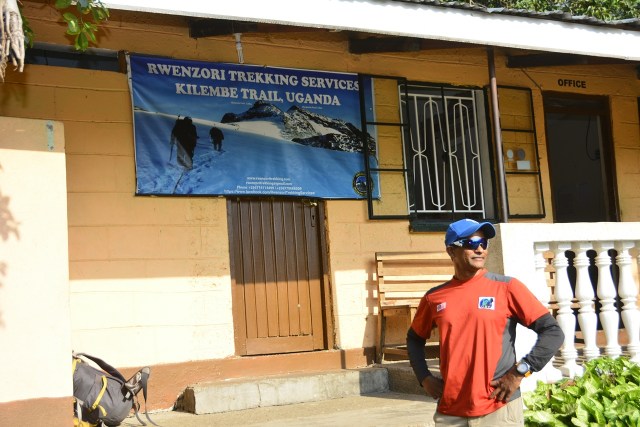
Ravichandran Tharumalingam, a Malaysian mountaineer, has spent the last eight days hiking Mount Rwenzori, also famously known as Mountains of the Moon.

Fondly known as Ravi, the climber was on his first trip to Uganda at the invitation of the Uganda High Commission in Malaysia and hosted by the Ministry of Tourism.

Ravi‘s nod for Mount Rwenzori is no mean approval. The Malaysian climber is one of a few humans who have climbed the world’s height peak of Mount Everest, a feat he achieved on May 15, 2006.

Mt Rwenzori a challenge like no other

Ravi revealed that climbing Mt Rwenzori was a challenge like no other.

“I have climbed many mountains… I’ve been to Mt Kenya and Mt Kilimanjaro, but none compares to what confronts you when you climb the Rwenzori Mountains,” he said in Kampala today.

His badge of honour for his mountaineering feat is the eight fingers he lost after a rope cut through his frozen hands during a climb.

He praised Uganda for conserving the Rwenzori environment, which he found very unique unlike any other he has seen in all the mountains he has climbed worldwide.

Ambassador Dorothy Hyuha, Uganda’s envoy to Malaysia, says the mission worked together with a Malaysian organisation to identify a high profile individual to promote Uganda as a tourist destination which will help boost the country’s economy.

While addressing the media at the Uganda Media Center of Wednesday, Ravi added that he will definitely share his Rwenzori experience with other mountain climbers so that they come and get the extraordinary experience themselves.

According Stephan Asiimwe, the Executive Director of the Uganda Tourism Board (UTB), the promotion by prominent climbers like Ravi is timely and in sync with the work they are doing at UTB.

“We have just completed a comprehensive marketing strategy to promote the whole Rwenzori region as prime mountaineering and cultural tourism destination” he said.

Tourism has emerged as Uganda’s top export, raking in over $1.3 billion in 2016 and employing over 450,000 people.

The country’s profile is also growing and more favourable for travellers around the world.

Ravi’s challenge was supported by both private and public sector institutions, among them the Rwenzori Trekking Services, the Ministry of Tourism, Wildlife and Antiquities, the Ministry of Foreign Affairs, the Uganda High Commission in Malaysia, Uganda Wildlife Authority and the Uganda Tourism Board.

Naguru Skyz Hotel: Kampala’s Newest Treasure

0

After hearing several remarkable reviews from people that have been to Naguru Skyz Hotel, one has no option but to drive towards Ntinda; seeking to see Kampala’s newest treasure. Located right at the top of Naguru Hill, you know as soon as you get to the top that you have arrived. As you drive into the hotel, it is evident that a lot of thought and personal touch was put into its construction. With a parking lot that can hold about 400 cars, this hotel is definitely going to be the new hangout spot.

Walking into the lobby, you are greeted by very pleasant and hospitable staff straight from the security at the entrance of the hotel, to the beautiful ladies at the front desk. The hotel’s major theme colours run from beige, grey, coffee and cream and has great marble floors. To the right of the lobby there is a mini coffee shop where you can order tea, coffee, and an assortment of delicious pastries. As a sister hotel to the Protea chain, the standard is nothing short of high class.

Past the coffee shop you get a great view of the swimming pool that is surrounded by a restaurant for those who prefer to have their meals by the poolside. The pool area also has a well-stocked bar and would be perfect for a party. In fact, when it comes to party venues, Naguru Skyz Hotel has several options that we shall explore as we go on.

Exquisite rooms

With 141 rooms, the hotel is divided into four blocks, each with five floors. Each floor has a corridor on both left and right, which leads to three rooms on each side. There are basically two types of rooms at Naguru Skyz: the standard room that has a bed, shower, mini bar and closet which has an ironing board and iron for those who prefer to do laundry themselves. There is also the option to send your laundry to room service for help.

There is also a safe in each standard room where you can keep your valuables. The standard room has a shared balcony in the event that you want to spend time outside and look at the amazing 180 degree view of Kampala. There are two standard rooms on each side of the floor. This room is perfect for a business trip or short visit.

The cream, black and coffee colours of the rooms make them feel so cozy and warm. The second type of room is the deluxe room. It is evidently much bigger and more spacious than the standard room. It has all the same facilities with exception of the bathtub which the standard doesn’t have. The deluxe room has a more spacious and private balcony and the mini bar is noticeably larger too. This room is perfect for couples, a small family and could also be great for a business trip if you like to be as comfortable as possible.

Club Lounge

From the 1st to 4th floor, the rooms are pretty much the same but the 5th Floor displays a unique and impressive arrangement. The 5th floor is dubbed the “Club Lounge” and is generally more exquisite. On the Club Lounge the floor has its own restaurant and bar. This floor might appeal to the corporates because it has three board rooms where meetings can be held and can sit up to twelve people. There are bathrooms across the boardrooms which is convenient. The Club Lounge also has a nice patio for coffee breaks, networking or some fresh air in the case of a long corporate day. On the left wing past the restaurant are two Club standard rooms and one Club deluxe room. This arrangement could appeal to a family that would like to have some privacy and the whole floor to themselves.

Dining

After taking a tour around the hotel rooms, it was time to check out the main restaurant. On our way down we passed by the Sky Deck. A nice space with an amazing view if you are looking to have a nice outdoor wedding, bridal shower, baby shower or cocktail party.

Chapter Two dinning is the beautifully organized restaurant at Naguru Skyz Hotel. Named Chapter Two as Chapter One is at Protea Hotel. The restaurant can sit about 88 people and is perfect for lunch meetings or dinner. It has a delicious buffet spread and in the event that you would like a more quiet and private space the restaurant has the V.I.P section. This, too, is amazing for small functions like birthday parties, anniversary dinners and the like. The V.I.P area can sit about 40 people.

For business conferences and presentations, the hotel offers two conference rooms and relevant services. They can sit 100 people and be transformed according to the client’s need in terms of sitting arrangement and set up.

Finally, the Hotel also has a gym and spa if one wants to keep up their fitness or relax after a long day.

Naguru Skyz Hotel is a beautiful hotel to say the least and is fast becoming popular. By night, the view and even appearance of the hotel is breathtaking. It has everything a hotel could offer and more. On New Nears’ eve there will be a great celebration to welcome 2018 and with the view of Kampala, the hotel will have a fireworks display, a definite must-watch spectacle on New Years’ Eve.

Uganda Gets more Luxury Hotels

0

A 2016 W Hospitality Group survey on hotel chains development in Africa revealed that there are about 1,200 more hotel rooms set to be constructed in Kampala and agreements had already been signed with famed international hotel chains such as Radisson Blu, Hilton Garden Inn and InterContinental to manage some of the new hotels. These hotels would open between 2017 and 2020, W Hospitality Group said.

This year has seen the opening of two new five-star and four-star hotels in the capital Kampala, bringing the total number of five-star facilities in the city to eight. The four-star Golden Tulip Canaan Kampala, which operates under the auspices of Golden Tulip, an international hotel chain, opened in Kampala in May, adding a total of “124 tastefully appointed rooms and suites, many of which include private balconies overlooking the lush grounds of the adjacent golf course.”

The new hotel, located in Nakasero in the city’s central business district, offers everything luxury: sleek conference rooms, a rooftop restaurant and lounge “where you can admire sweeping views over Lake Victoria”, a wellness centre and gym.

October saw the opening of the five-star Pearl of Africa Hotel, also located in the swanky Nakasero neighbourhood. The 23-storey property, which offers guests a 360 degrees view of Kampala, has amenities such as “a 740 square-metre ballroom, nine meeting rooms, two boardrooms, a business hub, three swimming pools and a cutting-edge wellness centre with a luxury spa and a fully equipped gym.”

The original plan was to make this facility Hilton Hotels’ Ugandan arm but it’s currently under the management of South Africa’s Sovereign Hotels.

Such imposing hospitality facilities, industry players say, have made Uganda a competitive meetings, incentives, conferences and exhibitions (MICE) destination in the region. Uganda now boasts up to 90 graded hotels and lodges – up from less than 30 just two years ago when the tourism ministry first classified the country’s hotels.

Uganda Tourism Boom has Just Started

0
Uganda Tourism

It has been a remarkably good year for the Uganda tourism industry. Visits to national parks have increased significantly. More international airlines have commenced daily flights to Entebbe International Airport.

Two new picturesque five-star and four-star hotels have swung their doors open for visitors to Kampala. New roads have been constructed to open up the country’s hidden gems. And gorilla trekking is now in the boom thanks to Rwanda’s inexplicable decision to double its permits from $750 to a whopping $1,500 – more than double the price in Uganda.

The industry’s robust growth can be partly attributed to the Uganda Tourism Board’s (UTB) latest industrious marketing drive. This year, the country’s tourism industry regulator has effectively utilized some of the most efficient marketing channels and subsequently put Uganda on the world tourism map.

Aside from successful public relations campaigns in European and North American mainstream media, UTB has also made good use of today’s most effective marketing medium: social media. In fact, a recent survey ranked UTB number two in Africa in the top tourism boards on Twitter, after South Africa. Uganda was also ranked the 4th best country in the world to visit in 2017 by Rough Guides, a leading UK travel publisher.

Uganda tourism statistics

Uganda’s tourism renaissance began 10 years ago following the end of the LRA and ADF wars that, for a long time, ravaged the northern and western parts of the country, stifling tourism growth in the 1990s and early 2000s.

In 1990, for instance, Uganda welcomed just 69,000 visitors, but the number skyrocketed to 642,000 in 2007 when the war lords were finally driven to Central African Republic.

The industry has since enjoyed an unwavering upward trajectory, year after year, save for 2009 when arrivals slumped from 844,000 visitors the previous year to 806,000.

The industry bounced back in 2010 with a bang, registering 946,000 international travellers, and in 2016 Uganda bested all its East African neighbours in terms of visitor numbers, attracting over 1.4 million tourists – and $1.4 billion of their cash. Now UTB’s target is to attract four million annual international travellers by 2020.

In the past decade, there has been a steady increase in national park visits, according to data from the Uganda Wildlife Authority (UWA), the government agency that overlooks the country’s 10 national parks, 12 wildlife reserves, five community wildlife management areas and 13 wildlife sanctuaries.

UWA data indicates that national park visitors increased from 108,678 in 2006 to 245,725 in 2016 – about half of them non-East Africans. The agency is yet to release the latest statistics but officials there have intimated to NTV Uganda that this year’s numbers are even more impressive.

New roads open up hidden gems

For a long time, one of the reasons some gorilla tourists preferred Rwanda to Uganda was the former’s smooth roads that lead to the Volcanoes National Park, home to the region’s star attraction, the critically endangered mountain gorillas that reside in only two places in the world: the Virunga Massif (a range of eight volcanic mountains that straddle Rwanda, Uganda and DR Congo) and Bwindi Impenetrable Forest in Uganda.

While the journey from Kigali International Airport to the Rwanda’s Volcanoes National Park takes only about three hours – but most importantly on good (very) roads – travelling from Entebbe International Airport to Bwindi or Mgahinga, Uganda’s national parks that play host to 53 per cent of the world’s remaining mountain gorillas, has for a long time been taking about two days, not just because it’s a long distance, but also because one had to drive on several kilometres of bumpy roads.

“Travelling to Bwindi or Mgahinga used be a five-day journey; two days going, one day trekking, and two days coming back to Kampala,” says Derrick Waisswa, a seasoned Ugandan tour guide and founder of Kuamka Tours, a Kampala-based travel concern.

But things have changed now. Today, the journey to Mgahinga and Bwindi is more comfortable and fast and now thousands of visitors are making their way there each year to have an up close encounter with the mountain gorillas. The recent construction of the Mbarara-Kabale and Kabale-Kisoro roads has reduced the time spent on the journey to just seven-eight hours.

“Now gorilla trekking is booming because of the easy access to Bwindi and Mgahinga,” says Waisswa. “In fact, ever since Rwanda hiked the price of their gorilla permits, demand for gorilla trekking in Uganda shot through the roof… Nowadays a tourist has to book six months in advance as permits are always sold-out.”

Uganda has 12 habituated mountain gorilla groups and only eight tourists can track each group per day, meaning that only 96 gorilla permits are available every day.

Away from Kabale, Kisoro and the mountain gorillas, today almost the entire country has paved roads, and the time spent on the journey from Entebbe to Kampala will also soon be reduced significantly following the construction of the $476 million, four-lane Kampala-Entebbe Expressway. The new Kampala-Entebbe road is expected to be completed in May 2018.

Uganda’s resilient aviation sector

We all know that Uganda’s aviation sector has recently been facing too many challenges. National carrier Air Uganda was put on the scrap heap. Talk of reviving the defunct Uganda Airlines is still just that – talk. Vule Airways, which was established in March 2017 and promised to begin life in November 2017 as Uganda’s newest airline, is yet to take off. And Entebbe International Airport recently fell off British Airways’ network map.

However, fortunately for the industry, more international airlines have launched flights to Entebbe International Airport in the past few years. Qatar Airways and East African Safaris have recently joined the fray and this year Brussels Airlines launched daily flights between Entebbe and Brussels.

Uganda tourism Going forward

Even though majority of international travellers to Uganda are Africans, Uganda has been marketing its attractions in Europe and North America because European and American travellers stay longer and spend more money, according to Stephen Asiimwe, the CEO of UTB.

But now going forward, UTB has a different game plan for 2018: to lure more African travellers, especially the growing middle class in Kenya, South Africa and West Africa. “Starting early next year we are going to hire PR firms to market Uganda in Kenya, South Africa and West Africa,” Asiimwe told Chwezi Traveller.

While Kenyans and Rwandans love Uganda because of its bustling entertainment scene, West Africans are interested in faith tourism while South Africans’ main motivators for travel to Uganda are culture and the country’s unique natural attractions.

For most international tourists, however, the biggest incentive for travel to Uganda is game viewing as the country is home to the African Big Five (lions, buffalos, leopards, elephants and rhinos), as well as chimpanzees and the iconic, yet critically endangered mountain gorillas, which are currently numbering an estimated 1,000 individuals.

Wildlife aside, there are several other attractions that make Uganda unique: the country is home to the source of River Nile, the world’s longest river; 50 per cent and 10 per cent of Africa’s and the world’s bird species respectively reside in Uganda; Lake Victoria, the world’s second biggest and Africa’s biggest fresh water lake, can be found in Uganda; Uganda’s Kibale National Park has the highest concentration of primates in Africa; and with more than 40 tribal groups, Uganda is the most ethnically diverse country in the world, followed by Liberia.

New Low-cost airline to boost Uganda’s Tourism Sector

0

The establishment of a new local airline is expected to boost Uganda’s tourism sector as connectivity to both domestic and international destinations improves.

Last week, Vule Airways announced its entry into the local airline market with promises of working “hand-in-hand with the Ministry of Tourism, Wildlife and Antiquities to ensure maximum value for money” for tourists.

Currently the country’s biggest foreign exchange earner, tourism is seen as a pivotal pillar of Uganda’s economy, raking in an average of $1.1 billion per year in revenues. In 2016, Uganda attracted an estimated 1.4 million international visitors and was the most visited country in East Africa.

“Our intention is to facilitate tourism and trade by providing easy, quick and affordable transport, especially to traders and tourists,” Robert Mwesigwa, the board chairman and managing director of the new airline, told a press conference in the capital Kampala last week.

“Vule Airways is to be operated as a budget airline to build domestic, regional and international routes covering all the continents of the world,” the airline said in a press release.

The new privately-owned Ugandan airline, which is currently waiting for an air service license from Uganda’s Civil Aviation Authority, hopes to take to the sky in November 2017, starting with flights from its hub at Entebbe International Airport to other East African Community member states: Kenya, Tanzania, Rwanda, Burundi and South Sudan.

In the beginning, the airline will deploy six aircraft, flying travelers to more than 20 destinations in Africa, Europe and Asia. But “by the end of the first 12 months,” the airline said, “Vule Airways anticipates its fleet to have grown from the initial six to 12 in order to cover all the continents of the globe.”

In total, the airline plans to fly to over 50 destinations—10 domestic and 40 international.

Vule Airways’ international routes will include, among others, London, Johannesburg, Cape Town, Mumbai, Lagos, Accra, Bangkok, Guangzhou, Singapore, Kinshasa, Dubai, Juba, Kigali, Bujimbura, Windhoek, Victoria Falls, Tunis, Tel Aviv, Mogadishu, Juba, Nairobi, Dar es salaam and Blantyre.

Locally, the airline will fly to Arua, Kisoro, Kasese, Jinja, Tororo, Soroti, Mbarara, Kihihi, Moroto, Kalangala and “where we have national parks and game reserves.”

The airline, which claims to have invested more than $40m so far, will kick off operations with one De Havilland DHC-8-200, one De Havilland DHC-8-400, three Boeing B737-700Ng and one Boeing B777-200ER.

Vule Airways’ biggest plane has a capacity of 300 passengers while the smallest will carry 40 passengers, the airline said.

Club Tavern Kick Masaka Opens in July

0

Another modern discotheque is slated to open in Masaka town next month to bring to three numbers of clubs in the area.

The latest club is called Club Tavern Kick. It is located at Kyabakuza in Kimanya-Kyabakuza division in Masaka municipality along Masaka-Kampala highway.
Club Tavern Kick is owned by businessman Emmanuel Lwasa, Masaka’s latest buzzing investor who is taking the area by storm.

Emmanuel Lwasa, the owner of the club says it is set to open at the end of July. He says the opening was delayed because there was review of the construction plan and installation of modern equipment.

Lwasa says with the arrival of modern equipment which are being installed, he is confident it will open on July 29th.

The three storayed discotheque has two dancing floors and modern bars. All the furniture was imported from China and Dubai.

In addition to Club Tavern Kick, Lwasa has modern garden, a bar and children play centre.
Club Tavern Kick joins other two clubs which operate in Masaka town. They are Ambiance Discotheque and Doris Discotheque.